When we think about what helps young people do well at school, we often think of hard work, good teaching and regular revision.
All of these are important. However, there is another factor that can be easy to overlook: sleep.
Research consistently links good sleep to how well young people concentrate, remember what they have learned and feel from day to day.
At our independent school in Berkshire, we encourage every pupil to make the most of their learning, and we know that a good night’s sleep plays an important part in this.
In this blog, we will explain why sleep is important for learning, what happens in the brain while we sleep and how much sleep young people need.
What happens in the brain while we sleep?
Although sleep may look like a time when the brain switches off, it remains busy throughout the night.
One of its most important jobs is sorting through the information we have taken in during the day.
It can be helpful to think of the brain like a library. During the day, new books arrive and pile up on the front desk. Overnight, sleep acts like a librarian, sorting each book onto the right shelf so it can be found again, and leaving the desk clear for new arrivals.
Without enough sleep, the books stay piled up. Information is harder to find again, and there is less room for new learning.
The benefits of sleep for learning
Understanding what the brain does overnight helps to explain why sleep is so important for learning.
Below are four of the main ways that a good sleep routine can support your child at school.
Enhances cognitive function
Getting enough sleep helps the brain work at its best, supporting skills such as logical reasoning and problem-solving.
In a study, participants were given a logical reasoning problem to solve in a video game. After struggling with it, half of the group took a nap, while the other half stayed awake for the same amount of time.
When they returned to the problem, those who had napped were almost twice as likely to solve it as those who had stayed awake.
At school, pupils use these skills every day, from working through a challenging maths question to planning an essay. A good night’s sleep helps them approach academic work with a clearer, sharper mind.
Strengthens Memory
Sleep plays an important role in helping young people remember what they have learned.
The sorting process that takes place overnight means that facts, vocabulary and ideas from the day are more likely to stay in long-term memory.
Research with high school students tested how well they could remember new vocabulary. Students who slept within a few hours of learning the words remembered them more successfully than those who stayed awake for longer first. This was the case regardless of the time of day the learning took place.
The researchers also found that staying awake through the night after learning had a lasting effect on memory. When the students were tested two days later, after they had caught up on sleep, those who had missed a night still remembered less. This showed that the difference was not simply down to feeling tired.
For pupils, this means that a good night’s sleep after learning can help their revision be more effective.
Improves focus
When you are tired, it can be much harder to stay focused. In lessons, this can make it more difficult for pupils to follow explanations, take part in discussions and keep up with new topics.
A study of almost 1,200 teenagers aged 13 to 17 found that those who slept less felt sleepier during the day. Feeling tired made it harder for them to pay attention, and this was reflected in lower grades.
It is also worth knowing that a weekend lie-in may not fully make up for a week of late nights. In another study of 15 to 19-year-olds, sustained attention levels had still not returned to normal after two nights of catch-up sleep.
Supports mood and wellbeing
At Luckley House School, we take a whole-child approach to education. We recognise that good mental wellbeing helps pupils learn, take part and thrive.
In a paper published in the Journal of Child Psychology and Psychiatry, UK researchers analysed the sleep of 5,033 teenagers and found a significant relationship between poor sleep and mental health difficulties.
The study also found that sleep difficulties at the age of 15 were linked to anxiety and depression later on. This suggests that building good sleep habits in the teenage years may help to protect mental health in the longer term.
A regular routine can be just as important as the number of hours slept. A University of Southampton study found that teenagers whose sleep times varied considerably between weekdays and weekends may be more likely to experience anxiety.
Keeping bedtimes and wake-up times fairly consistent is a simple, positive step that can help to support your child’s wellbeing.
How much sleep do young people need?
According to NHS guidance, school-age children and teenagers need more sleep than adults:
- 6-13 years: 9-12 hours
- 13-18 years: 8-10 hours
These figures are a helpful guide rather than a strict rule. Everyone is different, and some need more sleep than others, especially during growth spurts or after being unwell.
Why young people find it harder to get enough sleep
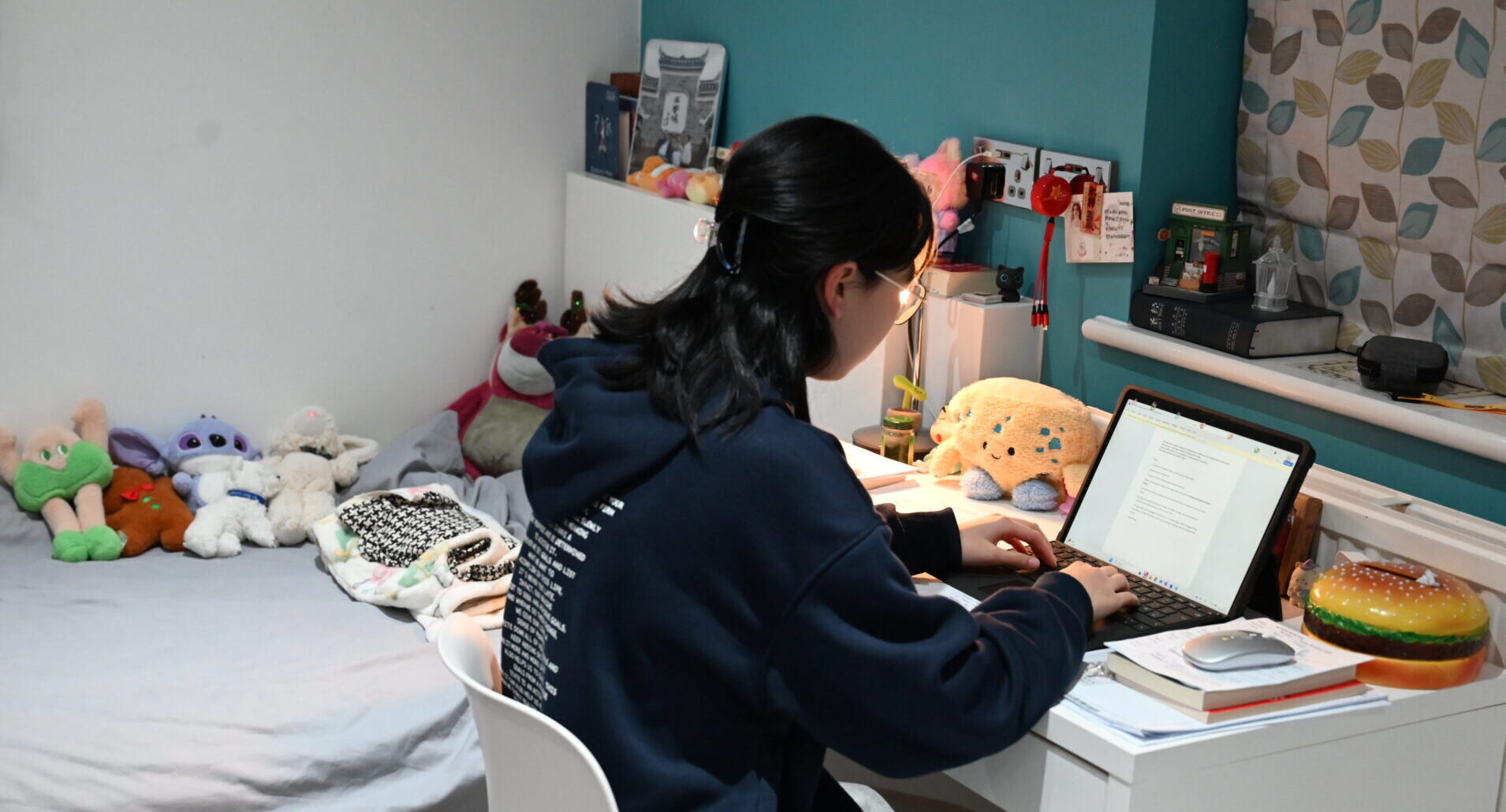
Many parents notice that their teenager seems wide awake late in the evening but finds it very difficult to wake up in the morning.
This is very common. During adolescence, the body clock naturally shifts later, so many teenagers do not feel tired until later in the evening.
Modern life can add to the challenge. Phones, games and social media are designed to hold our attention, and the light from screens can make it harder to fall asleep. Busy schedules that include clubs, sport and time with friends can also reduce the time available for sleep.
It is important to remember that this is a normal stage of growing up. With understanding and support at home, most young people can find a routine that works well for them.
Sleep and exams: why all-nighters do not work
When exams are approaching, it can be tempting to stay up late revising.
However, as we have seen, sleep is when the brain stores what has been learned. Cutting sleep short means that much of that hard work may not be retained.
Research from UC Berkeley has found that staying up all night reduces the ability to take in new facts by nearly 40%. This means that a late-night cramming session can make it harder, rather than easier, to learn.
A more effective approach is steady revision spread over several weeks, alongside a regular bedtime. Revising a topic in the evening, getting a good night’s sleep and then completing a short review the next morning can help pupils make the most of the way the brain learns.
For some pupils, flexi-boarding can help during exam periods. Our flexi-boarding provision enables a number of our day students to stay overnight, giving them valuable time to revise in the evening, with the reassurance that they will be in school and ready for their exam the next morning.
If your child is finding exam season difficult, you may find our blog on coping with exam stress helpful.
Simple tips for better sleep
A few small habits can help your child get the sleep they need:
- Keep bedtimes and wake-up times as consistent as possible, including at weekends.
- Encourage a screen-free wind-down in the hour before bed, such as reading.
- Charge phones and other devices outside the bedroom overnight.
How we support wellbeing at Luckley House
Our size means that we are able to get to know every pupil as an individual.
All pupils have daily contact with their Form Tutor, who takes a close interest in both their academic progress and their social welfare. Staff also meet regularly to discuss the individual progress of each child.
We value strong relationships with families, and parents are always welcome to come into school to talk over any concerns.
Most sleep difficulties are temporary and improve with small changes to routine. If your child’s sleep problems continue, or seem to be affecting their mood or daily life, it is a good idea to speak to your GP. Your child’s Form Tutor will also be happy to talk things through with you.

Sleep is an essential part of learning. It is when the brain sorts and stores the day’s information and prepares to take in more.
Good sleep supports cognitive function, concentration, memory and wellbeing, and a regular routine is one of the simplest ways to protect it.
For parents, the most helpful approach is to encourage consistent bedtimes and a calm wind-down before sleep.
At Luckley House School, we believe that choosing the right school is about finding an environment where your child can feel happy, supported and confident as they continue to learn and grow.
If you would like to find out more about life at Luckley, we would be delighted to welcome you for a visit.
Visit Luckley